
 4.9
4.9 4.6
4.6More than 1,000 travel companies trust us to sell their tickets all in one place.





Overview of Trains in Spain
Spain boasts one of the most extensive and modern railway networks in the world. If you plan to travel Spain by train, you are choosing the preferred mode of transport for locals and tourists alike. Whether you are commuting between major business hubs or mapping out a complete scenic Spain by train itinerary, the Spain train system offers a perfect blend of speed, comfort, and reliability.
The Spanish rail network is exceptional, featuring the second-largest high-speed rail infrastructure globally (over 3,200 km) and the longest in Europe. Spanish high-speed rail services—such as the national operator Renfe's flagship AVE and the private operator iryo—can reach speeds of up to 310 km/h. Often referred to by visitors as the Spain bullet train, these services rapidly connect major cities like Madrid, Barcelona, Seville, Valencia, and Málaga.
Supplementing these are low-cost operators like Avlo and Ouigo España, alongside extensive regional and commuter networks that serve smaller towns. Choosing trains in Spain means arriving right in the city center, skipping airport queues, and enjoying the Spanish countryside from your window.
Spain's High-Speed Rail Network
Spain features the longest high-speed rail network in Europe, spanning nearly 4,000 kilometers, making it the second-largest globally just behind China. The infrastructure is world-class, with tracks designed to accommodate speeds of up to 350 km/h, allowing Spanish high-speed rail services to regularly cruise at an impressive 310 km/h.
This extensive network is built around key high-speed corridors that seamlessly link the capital to major destinations, including the Madrid to Barcelona, Madrid to Seville, Madrid to Valencia, Madrid to Málaga, and Madrid to Granada routes. The network is also constantly evolving, with the highly anticipated Mediterranean corridor currently under construction and further high-speed expansions into Galicia actively in progress.
Why travel by train in Spain?
- Speed & Convenience: High-speed connections easily beat flight times on key routes. Traveling from Madrid to Barcelona takes just 2h 30m by train.
- Affordability: Increased market competition means you can find train tickets Spain starting from just €7 with low-cost operators Avlo and Ouigo.
- Sustainability: Rail travel reduces your carbon footprint significantly compared to driving or flying.
- Comfort: Spanish trains are highly comfortable, offering free WiFi, power sockets, legroom, and café-bars.
Are Trains in Spain Comfortable?
Trains in Spain are generally considered comfortable, clean, and modern. High-speed trains typically offer a smoother, quieter experience than regional services, with plenty of legroom, air conditioning, and luggage space even in standard class. While low-cost operators like Ouigo offer a great baseline of comfort, premium options like Renfe's AVE and iryo provide spacious seating and enhanced service options for a superior ride.
What Time Do Trains Usually Run?
Train frequency depends on the route, but major high-speed corridors offer exceptional flexibility. Busy routes like Madrid-Barcelona often see trains departing every 30-60 minutes during peak periods. Schedules generally run from early morning (around 06:00) until late evening (around 22:00), subject to operator timetables and seasonal changes.
How to Book Spain Train Tickets
Booking your Spain train tickets doesn't have to be complicated. International travelers occasionally report that the official local websites reject foreign credit cards, but with Omio, you can easily compare schedules and buy Renfe train tickets or secure seats with private operators in three simple steps:
- Search: Enter your departure and arrival cities and travel dates in the Omio search bar.
- Compare: View all available operators (Renfe, iryo, Ouigo España, Avlo) in one list and compare them side-by-side.
- Book: Select your preferred class, pay securely in your own currency, and receive your mobile e-ticket instantly.
Spain Train Ticket Types & Fares
Understanding Renfe tickets and private operator fares is key to finding the best deals.
- Renfe Fares: * Básico: The cheapest option. Non-refundable, non-changeable, with standard seating.
- Elige: Semi-flexible. Allows changes (with a fee) and seat selection. Available in Estándar (2+2 seating) or Confort (2+1 wider seating).
- Prémium: Fully flexible, 100% refundable. Includes Confort seating, free changes, station lounge access, and an at-seat meal with wine.
- iryo Fares: Ranging from Inicial (budget) and Singular (standard plus) to Singular Café (business) and Infinita (executive, featuring a full gourmet Mediterranean meal served at your seat).
- Ouigo & Avlo: Both operate a low-cost, single-class model (Avlo's Básica and Ouigo's Essential). Upgrades for XL seats or flexibility (like OUIGO Plus or Flex) can be purchased as add-ons.
Is First Class on Spain's High-Speed Trains Worth It?
First class (such as Renfe's Confort or iryo's Singular) is often worth the upgrade if you value extra space, a quieter environment, and flexible ticket conditions. For journeys longer than 2-3 hours (like Madrid-Barcelona), the added comfort and potential lounge access provide a premium experience. However, for shorter trips or budget-conscious travelers, standard class is more than comfortable enough.
How to Find Cheap Train Tickets in Spain
Navigating pricing requires understanding the dynamic model used by operators. Prices fluctuate based on demand, season, and how far in advance you book. To maximize your savings, consider adjusting your travel times and taking advantage of off-peak hours.
Cheapest Days and Times for Trains in Spain
| Travel Window | Price Impact | Best For |
|---|---|---|
| Midweek (Tue-Thu) | Lowest average prices | Budget travelers with flexible schedules |
| Midday / Late Evening | Cheaper fares (off-peak) | Avoiding the commuter rush |
| Friday / Sunday | Highest demand, peak pricing | Weekend getaways |
| Advance (2-12 weeks) | Maximum early-bird discounts | Fixed itineraries |
The ideal booking window is 2 to 12 weeks in advance. Tickets typically go on sale between 30 to 90 days before departure, varying by route and operator. The first release of tickets usually offers the absolute cheapest fares, and prices incrementally increase as seats sell out. Renfe often releases tickets in rolling blocks, so if you don't see your desired train 90 days out, set a reminder to check back.
Generally, no. Spanish train operators use dynamic pricing, meaning prices almost always increase as the departure time approaches. For high-speed AVE routes or Friday/Sunday travel, same-day tickets can be very expensive. However, same-day travel can remain affordable if you are taking regional trains (which have fixed pricing) or catching a midday/midweek train on a route with frequent departures that hasn't sold out.
Pricing varies by route, but for major high-speed corridors, Avlo and Ouigo España are consistently the cheapest. Avlo fares start at €7, while Ouigo starts at €9. For shorter distances, standard Regional trains are usually the most cost-effective. Always compare side-by-side on Omio to find the best deal for your specific date.
Deals, Passes, and Loyalty Discounts
- Spain Rail Pass: For non-European residents, a Spain train pass (Eurail) offers unlimited travel for a set number of days. EU residents can use the Interrail Spain Pass. Is a rail pass worth it? Passes are highly valuable for flexible, multi-city itineraries without fixed plans. However, since seat reservations are compulsory and incur extra fees (€10-€23.50), point-to-point tickets are often cheaper if you have fixed dates and can book advance low-cost fares.
- Youth & Senior Discounts: Travelers under 26 can utilize the +Renfe Youth Card 50, while travelers over 60 can purchase the Renfe Tarjeta Dorada (Gold Card) for up to 40% off.
- Group Travel: Look out for Renfe's Mesa fare, which discounts blocks of four seats facing each other around a table.
- Loyalty & Seasonal Offers: Frequent travelers can use the Más Renfe loyalty program for up to a 10% discount. During summer, Spanish and EU residents aged 18-30 can utilize the seasonal Verano Joven program for up to 90% off.
Popular Train Routes in Spain
Explore the most popular connections across the country.
| Route | Journey Time | Distance | Trains/Day | Price From |
|---|---|---|---|---|
| Madrid → Barcelona | 2h 36m | 504 km | 37 | €7 |
| Barcelona → Madrid | 2h 36m | 504 km | 37 | €7 |
| Madrid → Seville | 2h 39m | 391 km | 24 | €8 |
| Madrid → Valencia | 1h 54m | 302 km | 24 | €7 |
| Valencia → Madrid | 1h 55m | 302 km | 24 | €7 |
| Madrid → Málaga | 2h 42m | 416 km | 19 | €8 |
| Málaga → Madrid | 2h 43m | 416 km | 18 | €8 |
| Barcelona → Valencia | 2h 47m | 303 km | 7 | €29 |
| Valencia → Barcelona | 3h 22m | 303 km | 7 | €29 |
| Madrid → Alicante | 2h 20m | 360 km | 10 | €9 |
| Alicante → Madrid | 2h 25m | 360 km | 10 | €9 |
| Barcelona → Seville | 5h 45m | 828 km | 4 | €35 |
Popular Train Itineraries in Spain
Looking at a Spain rail map can be overwhelming, so we have gathered the most popular routes to inspire your trip.
A perfect route for first-timers encompasses Madrid, Andalusia, and Barcelona.
- Day 1-2: Madrid. Take a day trip to Toledo (via the Madrid to Toledo line) or Segovia (using the quick Madrid to Segovia AVE service).
- Day 3-4: Head south from Madrid to Cordova and then onward from Cordova to Seville.
- Day 5: Take the high-speed cross-country train from Seville to Barcelona.
- Day 6-7: Explore Barcelona. (Check our travel blog for a deep dive into the 7-Day Classic Spain itinerary!)
If you are short on time, Andalusia is still highly accessible from the capital:
- Day 1: Head directly from Madrid to Granada to explore the Alhambra, or travel via Córdoba to hop on the Seville to Cordova route.
- Day 2: Return back from Seville to Madrid or catch the train from Granada to Madrid. (Read our dedicated Weekend Andalusia Express blog post for more tips!)
Explore the green mountains and rugged coastlines of the north. Connect historic coastal cities like San Sebastián, Bilbao, Santander, and Oviedo without needing a car. You can also take the Zaragoza to Canfranc mountain line through the Pyrenees, or ride the historic wooden Tren de Sóller in Mallorca. (Find the full list of beautiful journeys in our Scenic Train Routes blog post!)
Some routes offer incredible value due to operator competition. Journeys like Madrid to Barcelona and Madrid to Valencia often have the lowest cost per kilometer when booked in advance, with tickets dropping as low as €7-€9. (Explore our Cheapest Train Routes guide for the best budget hacks!)
Major Train Stations in Spain
Navigating the Spanish rail network means passing through some spectacular stations:
- Madrid Puerta de Atocha: Spain's largest station and the primary hub for the south and east, famously featuring an indoor tropical garden. It operates the massive Madrid Atocha to Barcelona Sants line (as well as general Madrid Atocha to Barcelona services), alongside routes from Madrid Atocha to Sevilla Santa Justa and Madrid Puerta de Atocha to Málaga María Zambrano.
- Madrid Chamartín: The main hub for northern routes, operating lines like Madrid Chamartín to Valencia Joaquín Sorolla.
- Barcelona Sants: The bustling hub for Catalonia, operating return routes from Barcelona Sants to Madrid Atocha and general services from Barcelona Sants to Madrid.
- Sevilla Santa Justa & Málaga María Zambrano: The twin gateways to Andalusia, effortlessly handling return trips from Sevilla Santa Justa to Madrid Puerta de Atocha and Málaga María Zambrano to Madrid Puerta de Atocha.
How to reach popular destinations by train
A Spain high speed rail journey gets you to the major hubs, but you might need a quick commuter train or bus to reach your final scenic spot.
Andalusia

Catalonia & Costa Brava

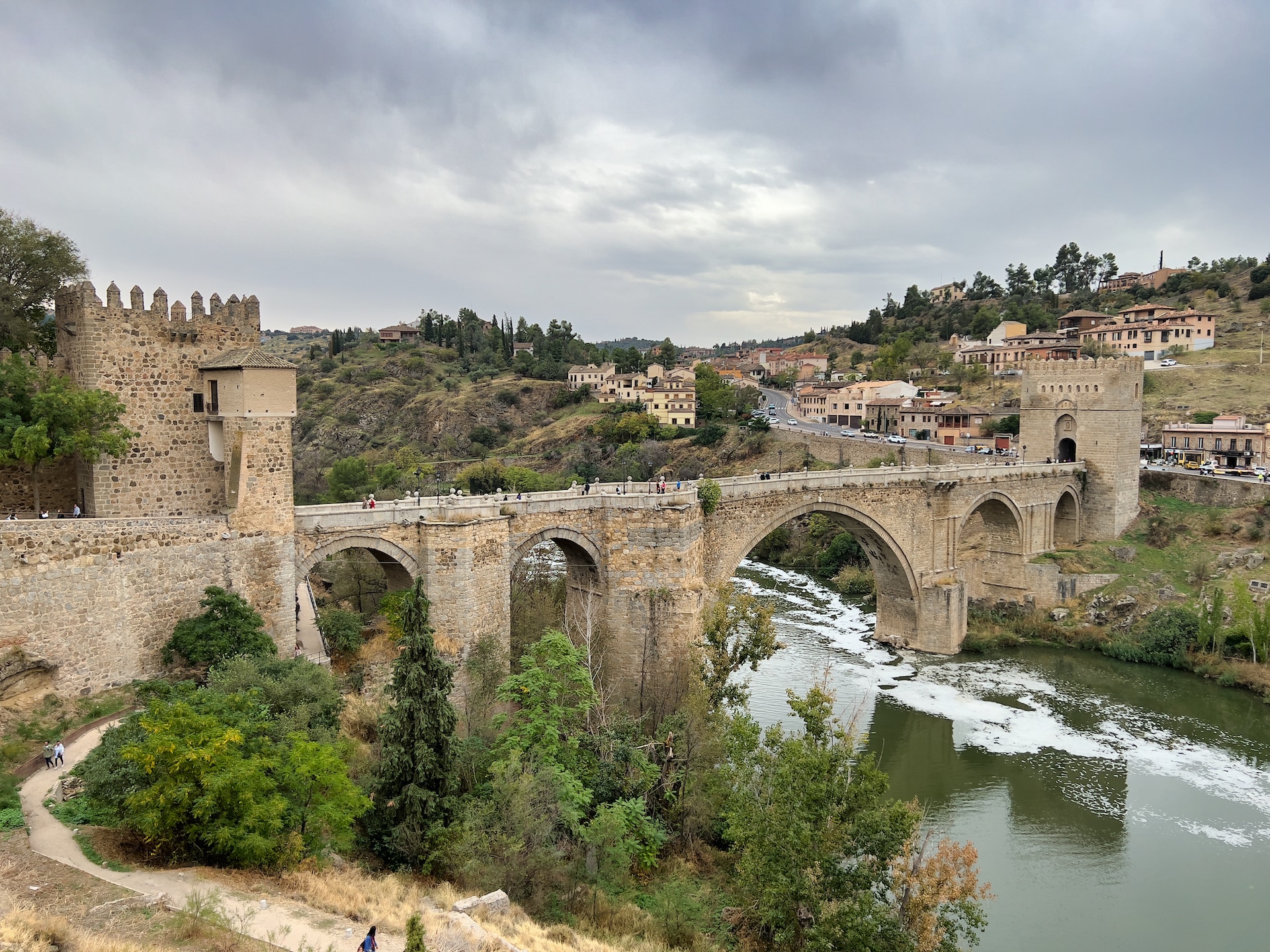
Castilla Day Trips
Basque Country & Northern Spain
Take the Alvia train Spain from Madrid to Bilbao or San Sebastián (~5h 30m). Locally, use the Euskotren regional network to hop between Basque towns, or the scenic narrow-gauge FEVE trains along the Cantabrian coast.
Valencia Region & East Coast
AVE, iryo, and Ouigo effortlessly connect Madrid to Valencia and Madrid to Alicante in under two hours. The Euromed connects Barcelona to Valencia down the Mediterranean coast. For beachgoers, the TRAM Alicante network stretches from Alicante all the way up to Benidorm and Dénia.
Galicia & Mallorca
Galicia is newly accessible via AVE expansion to Ourense, with Alvia services continuing to Vigo and operating return routes from Santiago de Compostela to Madrid. From Vigo, you can catch the cross-border Tren Celta directly to Porto, Portugal. In the Balearic Islands, Mallorca lacks mainland rail links but boasts the SFM train network from Palma to Inca and Manacor, plus the iconic wooden Tren de Sóller.
Train Companies: Renfe Spain and Private Operators
When booking, you will primarily choose between the state-owned operator Renfe Spain and several highly competitive private operators.
The best operator depends on your priorities:
- Best for network coverage: Renfe is the strongest all-around choice for ultimate network coverage and flexibility, reaching deep into regional Spain.
- Best for premium comfort: iryo stands out for comfort and a premium modern onboard experience with exceptional dining.
- Best for budget travel: Ouigo España and Avlo are perfect for budget travelers prioritizing the lowest possible fares on major high-speed routes.
Renfe (AVE and Avlo)
As the primary state operator, Renfe manages the vast majority of Spanish rail traffic.
- AVE train Spain: The flagship high-speed service, reaching 310 km/h with premium amenities like café-bars and free WiFi.
- Avlo: Renfe's budget high-speed brand. It offers stripped-back service, vending machines instead of a café car, and strict luggage limits to keep fares low.
- Renfe Regional: Includes the Alvia, Euromed, Avant, Intercity, Media Distancia, and Cercanías (commuter trains).
iryo (ILSA)
iryo is a private high-speed operator that launched in 2022, focused heavily on passenger experience. Utilizing modern Frecciarossa 1000 trains capable of 360 km/h, they are known for excellent onboard service, free unlimited 5G WiFi, and Mediterranean gourmet meals served at your seat in premium classes.
Ouigo España
Ouigo is the low-cost brand of French operator SNCF, running double-decker trains in Spain since 2021. It offers a no-frills, single-class service with tickets from €9. You can purchase extras like OUIFUN entertainment or upgrade to XL seats.
Night Trains in Spain
While high-speed rail has shortened transit times, sleeper options still exist. Renfe's Trenhotel services and cross-border night routes like the Lusitania (Madrid to Lisbon) offer seat, couchette (Literas), and premium sleeper (Gran Clase) cabins for those who prefer to travel while they sleep.
Airport Connections in Spain
Omio connects you seamlessly from the runway to the railway.
- Madrid Barajas (MAD): Take Cercanías line C1 to Chamartín, Sol, or Atocha (25 minutes to Sol, €2.60).
- Barcelona El Prat (BCN): Take RENFE Cercanías line R2 Nord from Terminal 2 to Passeig de Gràcia or Sants (25-30 minutes).
- Málaga (AGP): Take Cercanías line C1 directly to Málaga María Zambrano AVE station (12 minutes, €1.80).
- Alicante (ALC) & Valencia (VLC): Alicante connects to the terminal via Cercanías line C1. Valencia requires Metro lines 3 & 5 to the city center.
- Palma (PMI), Bilbao (BIO), & Seville (SVQ): These airports currently require quick bus transfers (EMT line 1, Bizkaibus, and EA bus respectively) to reach the main city train stations.



Travelling by Train in Spain FAQs
Booking & Policies
If you hold a cheap, un-flexible ticket (such as a Básico fare), it is non-refundable and not valid for later trains; you will need to buy a new ticket. Flexible and premium fares may allow changes, but these usually must be made before your original departure and may require paying a fare difference.
Infants under 4 travel for free without a seat on Renfe, but they must hold a physical "Niño gratuito" (Free Child Ticket) to board. Children under 14 get a 40% discount on standard Renfe fares. Low-cost operators Avlo and Ouigo offer a fixed price of €5 for children under 14.
Yes, but rules vary. Renfe allows small pets in carriers; they travel for free on premium fares (like Elige Confort or Prémium), but require a small fee on standard tickets. Dogs not in carriers require a specific ticket, a leash, and a muzzle. Ouigo charges a flat €5 for small pets.
On-Board & Luggage
Traditional Renfe trains generally allow up to 3 pieces of luggage with a combined weight limit of 25 kg. The largest piece must not exceed 85 x 55 x 35 cm. However, low-cost carriers like Avlo and iryo's Inicial class are very strict, typically allowing only one small personal item and one cabin bag unless you pay for a luggage upgrade.
Yes. Folded bicycles packed in a carrying case (dimensions no larger than 120 x 90 cm) are treated as standard hand luggage and travel for free on AVE and long-distance trains. Unfolded bikes are generally only permitted on regional and commuter (Cercanías) trains, subject to space.
On major high-speed trains, you can expect comfortable seating, air conditioning, power outlets, and free Wi-Fi. Traditional high-speed trains feature café-bar cars, while low-cost brands like Avlo use vending machines. Premium classes, like those on iryo or AVE Confort, offer spacious seating and complimentary meals. Smoking is strictly forbidden on all trains and platforms.
Yes, most trains and major stations in Spain are highly accessible for passengers with reduced mobility. Major hubs like Madrid Atocha and Barcelona Sants feature step-free entrances, adapted toilets, and accessible ticket counters. Onboard, high-speed trains provide dedicated wheelchair spaces and accessible toilets. Renfe also offers Atendo, a free assistance service to help passengers navigate the station and board the train.
Station Check-In
It is highly advisable to arrive 20-30 minutes before your scheduled departure. Spain uniquely requires a quick luggage X-ray security check before boarding all high-speed routes. Platforms are usually displayed on departure boards ("Salidas") around 15-20 minutes in advance.
For e-tickets booked via Omio, validation is not required as they are validated upon issue. Keep them handy on your phone to show staff. However, for some regional or local commuter trains (e.g., Cercanías), you will need to scan your paper ticket or QR code at automated turnstiles to access the platforms.
Travel to these countries by train, bus, flight or ferry
Other train journeys you might be interested in
Most popular train connections
The Omio App Makes Travel Planning Easy
We’ll get you where you want to go. From live train updates to mobile tickets, our innovative app is the ideal way to plan and keep track of your travel.


