
 4.9
 4.6
More than 1,000 travel companies trust us to sell their tickets all in one place.


Popular routes
Popular ferry routes in Spain
Looking for ideas for your next ferry journey in Spain? Explore popular routes below, check ferry times and find useful information to help you plan ahead.
Barcelona to Palma ferry
- Balearia
- Gnv
- Trasmed
Palma to Ibiza (Island) ferry
- Balearia
- Trasmed
Valencia to Palma ferry
- Balearia
- Trasmed
- Gnv
Barcelona to Ibiza (Island) ferry
- Balearia
- Gnv
- Trasmed
Valencia to Ibiza (Island) ferry
- Balearia
- Gnv
- Trasmed
Denia to Ibiza (Island) ferry
- Balearia
- Gnv
- Trasmed
Barcelona to Mallorca (Island) ferry
- Balearia
- Gnv
- Trasmed
Ibiza (Island) to Barcelona ferry
- Balearia
- Trasmed
- Gnv
Ibiza (Island) to Valencia ferry
- Balearia
- Trasmed
- Gnv
Palma to Barcelona ferry
- Balearia
- Trasmed
- Gnv
Book Ferries to Spain on Omio – Cheap Tickets for Spanish Ferries
The tourism sector in Spain is one of the biggest in the world. In fact, there are more Germans entering Spain every year than the total number of tourists that visit Morocco, another popular destination sitting across the Strait of Gibraltar. And Germans aren’t even the most frequent visitors, as Brits love this country more than anyone else, and Spain also attracts a lot of visitors from France, Italy, the Netherlands, and the United States.
Many of those fly into the country, but a large number take ferries from Italy and France, among others. Ferries in Spain are also popular with domestic travelers, as well as Spaniards looking to visit countries around the Mediterranean Basin. If you’re one of these travelers and you’re looking for a cheap ferry ticket to Spain or from Spain, book with Omio.
Top 3 Destinations in Spain
Ferry Boats Spain – Discover Spain’s Island Ferries
There are numerous ferry companies in Spain and they all form part of a highly competitive industry, one primarily tasked with ferrying passengers from the mainland to the dozens of islands that sit on either side of the peninsula, both in the Atlantic Ocean and the Mediterranean Sea.
Some of the most popular ferries to Spain and from Spain include Palma to Barcelona, which takes passengers from the Catalonia region in North-eastern Spain to Palma on the island of Mallorca. The route takes about 7.5 to 8 hours on average and it is served by several major ferry companies, including Balearia.
Palma is also accessible via Valencia, a route that takes a similar length of time and is provided by GNV, among others.
You can also book scores of ferries from Barcelona and ferries from Malaga on the mainland or opt for a ferry route from Tenerife on the Canary Islands.
For cheap ferry tickets from the Spanish mainland to an island or a cheap ferry crossing to Spain, stick with Omio. Just search and compare to find the cheapest ferry ticket and then book when ready.
How does the ferry system work in Spain?
With the exception of connections to North Africa such as the 2-hour ferry from Algeciras to Tangier, most international ferries from Spain require long journey times, with passengers typically needing to remain in the boat for between 20 and 40 hours.
As a result, many ferries in Spain connect from the mainland to either the Canary Islands, which sit off the coast of Western Africa, or the Balearic Islands off the eastern coast of Spain. These islands include massively popular destinations like Tenerife, Fuerteventura, Gran Canaria, and Lanzarote in the Canary Islands and Ibiza and Mallorca in the Balearic Islands.
The biggest of the Canary Islands can be reached direct by ferry but transfers are often needed for the smaller islands. When you book a cheap ferry to Spain with Omio, you’ll see which options have transfers and which ones are direct. There are also filters available so you can limit searches to only those that are direct. Filters are also available to show only Spanish ferries that allow cars, an option you have with a number of ferries that travel to the Canary Islands.
Ferries to these popular, sun-drenched islands are available throughout the year. The winters are usually very mild, so these destinations are popular all year long.
The same is true for the Balearic Islands, with daily ferries connecting you to the islands throughout the year. Most of the ferries to Spain that connect to these islands do so from Barcelona, home to a major seaport in Spain.
Good to know about ferries in Spain
If you plan on booking a cheap ferry to Spain using Omio, here are a few useful things worth knowing about the country’s ferries.
- Island hopping: Some of the most popular ferries to Spain are part of island-hopping routes, whereby travelers will visit multiple islands and explore more of the country during a single vacation.
- Visiting North Africa: The most popular international ferry routes in Spain connect to Tunisia and Morocco. You can take a quick ferry to Spain from these countries or pay them a visit via Spanish ports such as Algeciras.
- Ticket options: Ferries in Spain will typically provide you with several ticket options. The most basic of these provide you with a small room and simple bunk beds while luxury options—deluxe rooms and suites—tend to have double beds and even sofas in the room. The price difference can be substantial though, so check in advance and judge whether or not the extra amenities are worth the cost.
- Taking a vehicle: It’s possible to take a vehicle on a ferry to Spain, but it depends on the boat and the ferry provider.
- Varied prices: Ferries to Spain are usually more expensive during high season in the summer.
- Yearlong connections: Many ferries to Spain are available throughout the year, but the frequency of these routes may dip during the winter.
- Facilities on board: Ferries in Spain have a range of facilities onboard. The extent of these will depend on the specific boat, but there is usually a bar/restaurant, as well as shops. Many of them also have a cinema and arcade.

La Sagrada Familia. Credit: Pixabay
How to Get Cheap Ferry Tickets to Spain
Ready to book a cheap ferry ticket to Spain? With Omio, the entire process takes only a few seconds. Our software was designed to be simple and accessible, so even if you’ve never booked before, you’ll fit right in. To show you how to book a cheap ferry crossing to Spain, let’s look at an example and guide you through it.
Let’s suppose that you find yourself on the beautiful island of Sardinia and now you need to connect to the mainland.
First, visit the search feature at the top of this page (and pretty much every other page on the Omio website). You’ll see a series of boxes. Enter your travel information here and hit “Search” to see all available options, including ferry tickets from multiple different providers.
Doing this for a summer Sardinia to Barcelona trip shows options from Grimaldi Lines. It shows a little green car symbol to indicate that we can take a vehicle, and we can also see that it’s a 13-hour direct trip—perfect!
To book this cheap ferry ticket to Spain, we just click the tile, choose the ticket class option, enter the details of the passengers, and then book. We can then use the booking number we receive to collect our cheap ferry ticket from a self-service machine at the station.
If you have any questions or issues regarding your booking, our multilingual customer support team is available to assist.
Spanish Ferry Map – The Ferry Network in Spain and Major Connections
You can take a ferry crossing to Spain from one of its islands and any other country in the Mediterranean region, all of which are bookable through the Omio platform.
Ferry Routes in Spain
Domestic ferries in Spain often connect to its islands. They are short and cheap, and you can book cheap ferry tickets for all of these routes using Omio, with regular offers available:
- Barcelona to Mahon: A direct route to the popular destination of Menorca. This route is covered by providers such as GNV, and it takes less than 8 hours on average. You can also take many ferries from Menorca, which have connections across Spain.
- Algeciras to Ceuta: Ceuta is an autonomous region in North Africa. It lies across the Strait of Gibraltar and is bordered by Morocco. You can take this ferry in just an hour or so, providing keen adventurers with a rapid way to across the strait. Ceuta to Algeciras is also very busy and served by the same company at a similar frequency.
- Mallorca to Barcelona: A ferry route to the mainland and one of Spain’s most visited cities. It’s a direct route that takes about 7.5 hours with GNV but is usually much shorter with Balearia. Both of these options are available for comparison with Omio.
- Ibiza to Barcelona: Another link between a popular island and the Catalonian capital. This route is also covered by both Balearia and GNV and it takes between 8 and 9 hours.
Still looking for inspiration for ferries in Spain? Consider the many ferries from Valencia on the mainland, as well as island-hopping routes like the ferry from Palma to Menorca or the ferry from Tenerife to Gran Canaria. You can also leave from Denia, near Alicante, on the ferry from Denia to Palma.
Ferry Companies Traveling to and From Spain
Spain has a highly competitive ferry sector, with several major companies operating services out of its biggest ports. There are also companies based outside of Spain that ferry passengers into the country, including the previously mentioned Grimaldi Lines, which is a large Italian ferry company.
See below for some of the biggest providers you will encounter when booking a cheap ferry ticket to an island in Spain.
| Balearia | GNV | Trasmapi | Fred. Olsen Express |
Balearia">Balearia
Balearia is a Spanish ferry company that services popular routes into the Balearic Islands, including the aforementioned connections between Barcelona and Palma. The company is owned by the Balearia Group. It uses modern fleets and is devoted to making its services as sustainable as possible, including switching to natural gas for several of its boats.
It had over 30 ships in its fleet at the last count and in addition to its many routes to its namesake islands, it also connects to the Canary Islands and provides some short international routes to North Africa and much longer services to the Caribbean.
GNV">GNV
Grandi Navi Veloci (GNV) is an Italian provider, but it services most countries in the Mediterranean and includes many connections in Spain. You can take a GNV ferry to Spain from Italian islands, and there are also lots of connections going the other way, including to ports in Sardinia and Sicily.
GNV is famed for its massive ferries, including La Suprema and La Superba, both of which are capable of carrying 2,920 passengers and around 1,000 cars.
Trasmapi">Trasmapi
Trasmapi is a ferry company based in the Balearic Islands. It serves these islands with a similar frequency as the aforementioned Balearia Group. It is part of the Ibiza-headquartered Insotel Group, which runs a number of hotels and resorts and has decades of experience in the travel industry, tracing its roots back to the 1960s.
FredOlsen ">Fred. Olsen Express
Fred. Olsen Express is a ferry service that runs routes to the Canary Islands. It is owned by a massive Norwegian company known as Bonheur, one that also owns the similarly named Fred. Olsen Cruise Lines. It owns a fleet of half a dozen modern ships. All of these ships are fast and are designed to connect passengers with the Canary Islands in as little time as possible.
Ferry Ports in Spain
Ferry ports are scattered along the mainland coast of Spain and you will also find them on all main Spanish islands. The biggest ports in Spain include:
- Port of Algeciras Bay: A massive port located in Andalusia. Its position in the southern tip of the country means it serves many short connections to North Africa, as well as the Canary Islands.
- Port of Valencia: A large container port that connects to locations in the Balearic Islands, among others.
- Port of Barcelona: A seaport in Spain that has been mentioned several times in this guide due to its many cheap connections to the Balearic Islands.
- Port of Bilbao: Although it’s not the busiest, this is the largest seaport in Spain in terms of total area.
- Port of Cartagena: A major cargo and passenger port in the Murcia region of Spain.
- Port of Denia: A key port, as it’s the closest one to the mainland on the Balearic Islands.
- Port of Malaga: An international port located on the Costa del Sol.
- Port of Tenerife: A fishing, trade, cruise, and passenger port on the Canary Islands.
- Port of Ibiza: The main port on the island of Ibiza.
- Port of Palma de Mallorca: A major port on the Balearic Islands.
- Port of Mahón: The port of Minorca.
Use Omio to book a cheap ferry ticket to any seaport in Spain.
Ferry from Mainland Spain to Balearics and Canaries
Ferry From Other Countries
You can take multiple international ferries from Spain, and if you cross over to Gibraltar for a vacation in the place they call “The Rock”, there are numerous departures from there as well. There are connections to Tunisia, Morocco, France, and Italy, the most popular of which include:
- Barcelona to Civitavecchia: Civitavecchia is in Rome, so this trip will take you from one major European to another. It takes about 25 hours and is available for most of the year, with the main provider being Grimaldi Lines.
- Algeciras to Tangier: A cheap and quick connection that departs several times a day and takes about 2 hours.
- Algeciras to Montpellier: A 40-hour ferry ride that will take you into France.
You can also take a ferry from Spain to several international destinations:
Ferries From Spain to the UK
Ferries From Spain to Italy
Ferries From Spain to Ireland
There are occasional ferry crossings from Spain into the Irish port of Rosslare. These connect from Bilbao and Santander on the northern coast of Spain.
Ferries From Spain to Algeria
Ferries From Spain to Morocco

Madrid. Credit: Pixabay
Ferry travel tips for Spain
Before you set sail for a seaport in Spain, take a look at the following travel tips:
- Travel in the off-season to save money. The weather is still good outside of summer, and there are big savings to be made on ferry tickets and accommodation.
- Check visa requirements if you’re visiting another country by ferry. Bear in mind that requirements may differ considerably between countries like Morocco and Italy.
- Check ticket requirements. Many tickets on Omio can be used as e-tickets, but ferry tickets may need to be printed out at the station using your Omio booking details.
- Book your cheap ferry ticket early to save more money and ensure you get the room that you want. Early bookings are also important if you’re taking a car on a busy trip, as there is limited garage space.
- Buy a cheap ferry ticket for a ferry to Spain with Omio. A few clicks are all that’s required to compare and buy your cheap ferry tickets.
More Information about Ferries in Europe
There are ferries connecting most islands in Europe, from beautiful Greek islands like Mykonos, Santorini, Kos, Crete, and Rhodes to destinations in Croatia and Italy. And these are just scratching the surface of what’s available, as there are many seas to cross and coastal cities to visit. So, if you want to see more of Europe, book your cheap ferry ticket with Omio, the home of fast and cheap travel comparisons.
Get started with our search function, at the top of the page. And remember, it’s not just cheap ferry tickets that you will find here. We also sell cheap train tickets, plane tickets, and bus tickets, taking you anywhere you need to go by road, rail, air, and sea.
FAQs
What is the quickest international ferry route from Spain?
What countries can I visit by ferry from Spain?
Can you take pets on ferries in Spain?
Where do ferries go in Spain?
Are there ferries between Italy and Spain?
How long is the ferry ride from Italy to Spain?
Are there ferries from Morocco to Spain?
Which ferries travel to Spain?
What is the fastest ferry to Spain?
What is the cheapest ferry to Spain?
What are the ferry ports in Spain?
Are ferries to Spain cheap?
What is the best time to visit the Canary Islands?
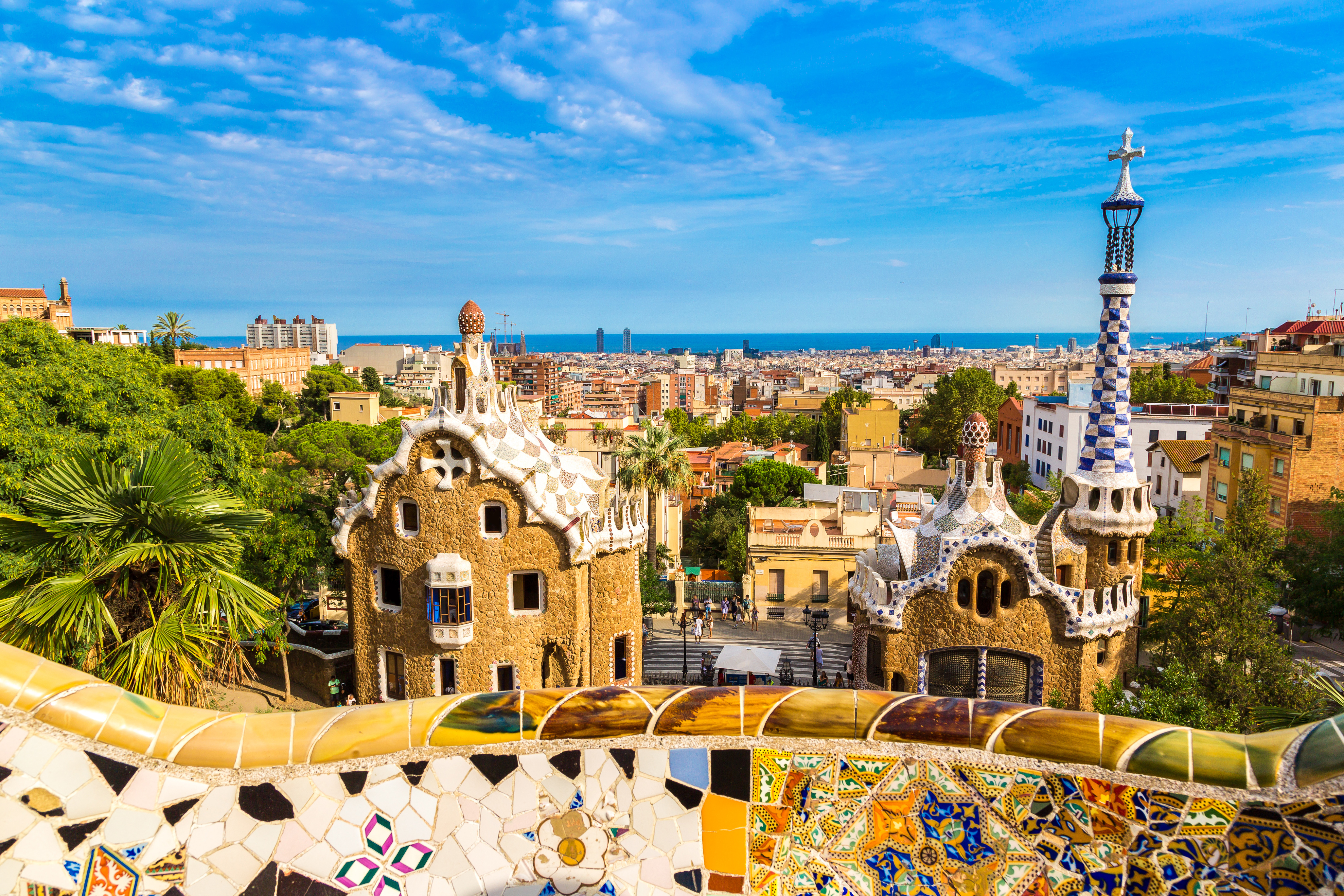
Park Guell, Barcelona. Credit: Pixabay
Spain by ferryExperience Spain by Ferry: Your Gateway to the Islands & Beyond
By Koen Berghuis


The ferry can be a great option for travelling within Spain, particularly if you are planning to visit some of the country’s beautiful islands, as well as for getting to Spain from abroad. And why wouldn’t you? Ferries can be affordably priced and certainly offer a more leisurely way to travel than flying. In my opinion, nothing beats taking in the views of the coastline as you arrive by ferry and enjoying that great sense of excitement for your next travel adventure.
Domestic ferries connect the Spanish mainland with the Balearic Islands and Canary Islands, as well as the Spanish exclaves of Ceuta and Melilla. There are also international ferry links connecting Spain with the UK, Ireland, Italy, Morocco and Algeria, which can work well for travellers arriving in Spain by sea or including the country in a wider European or North African trip. Let me show you what you can expect when you take a ferry in or to Spain!

Baleària ferry in the port of Ibiza
Routes Overview
Spain has multiple ferry operators, including both Spanish and foreign companies. Some of the busiest routes, such as Barcelona to Palma de Mallorca, are operated by multiple companies, while other routes may have only a single operator. The biggest ferry companies operating in Spain include Baleària, Trasmed and Armas Trasmediterránea. My previous travel experience island hopping in the Balearic archipelago between islands such as Mallorca, Menorca and Ibiza involved Baleària ferries of all sizes, including fast, modern catamarans and conventional ferries, which I personally prefer as they have more character and tend to have cheaper ticket prices as well.
For international routes, you can also look at companies such as AML, Brittany Ferries and Grimaldi Lines. On my last trip to the Iberian Peninsula in December 2025, I boarded a Brittany Ferries ship from Rosslare in Ireland across the Atlantic Ocean and Bay of Biscay to Bilbao in Spain, an epic two-night crossing. The same company also operates ships between UK ports such as Portsmouth and Plymouth and Santander and Bilbao in Spain. Popular connections such as Valencia to Mallorca and Ibiza to Barcelona are also easy to book.

Baleària ferry in the port of Málaga
Onboard Experience
The onboard facilities on ferries vary between ships operating short crossings, such as high-speed catamarans on routes between Algeciras in Spain and Tangier in Morocco or some Spanish inter-island ferries, and ships operating longer routes, such as those between Barcelona and Ibiza or Cádiz and Gran Canaria. On ferries that only operate shorter routes, the onboard facilities can be relatively simple, with just a variety of seating options, a single shop and an onboard bar or perhaps a takeaway restaurant, while ships operating longer overnight sailings tend to offer a wider range of facilities. These ships will also have accommodation options such as reclining seats for budget travellers and private cabins for those looking for more comfort. On my sailing from Ireland to Spain, I had booked a private cabin, which came with an en-suite bathroom. Although it was rather basic, it had all the facilities I needed and provided a comfortable place to sleep. I was also more than satisfied with the choice of bars and restaurants on board, and I certainly loved watching the sunset and sunrise from the open deck out at sea.

Restaurant on my Brittany Ferries ship to Spain
Station Tips
Port facilities in Spain are usually quite modern, making it easy to check in and wait comfortably for your departure. Of course, the size of these facilities varies between ports. Make sure you check in advance exactly where in the port your ferry departs from and what the check-in cut-off time is, as these rules are strictly enforced. Note that check-in times and procedures differ between foot passengers and those travelling with a car or other vehicle. Foot passengers typically check in at a passenger terminal, while passengers travelling with a car usually check in at a dedicated vehicle check-in area and simply wait in their car until they are given permission to drive on board. Some ports are quite large, and different ferry operators may use separate terminals that are located quite far apart from one another. On my last ferry trip to Spain, I arrived at the port of Bilbao as a foot passenger. We were driven by van from the car deck of the ferry to the main port building for passport control. Afterwards, the van took us from the port to the centre of Bilbao, dropping us off right in front of the Guggenheim Museum. This free transfer from the port to the city centre was certainly something I appreciated!
Best Time to Travel
Many ferry routes in Spain have seasonal schedules, with most sailings taking place during the summer, fewer in the shoulder season, and only a limited number of sailings in winter. If you travel during the low season, make sure you check which dates your preferred ferry actually operates and plan the rest of your itinerary around this. When travelling in the high season, it’s vital to book your sailing as far in advance as possible, as tickets can sell out quickly. This is especially true if you want a private cabin on an overnight sailing.
Things to Know Before Traveling
When you think of Spain, you probably imagine sunny weather, but this isn’t always the case. Especially in winter, storms and high winds can disrupt ferry schedules, particularly on routes operated by high-speed catamarans or smaller vessels, which are more susceptible to rough weather than conventional Ro-ro ferries. If you travel in winter, I would recommend planning a foolproof itinerary so that a cancellation or delay at the start of your journey doesn’t ruin your other plans, or even cause you to miss your flight home. I was highly curious about what the weather would be like on my crossing from Ireland to Spain in December 2025, as the waves in the Bay of Biscay can be notorious at this time of year. Fortunately, my ferry journey to Spain was perfectly pleasant, and we even had some sunshine out on the open sea!
Scenic Routes
Always compare prices between multiple ferry companies if more than one operates on your route. Alternatively, it can be worth checking departures from different ports, as you may find a better deal that way. For example, if you want to reach the Balearic Islands of Mallorca, Menorca, or Ibiza by ferry, you could compare routes from several mainland ports, including Barcelona and Valencia. Similarly, there are also many different ferry routes between mainland Spain and Morocco.
Booking Tips
Depending on the ferry company and route, ticket prices may either be fixed or vary depending on how far in advance you book, with cheaper fares often available for early bookings. It’s worth booking your ferry well in advance, as this can help you secure a lower fare while also giving you a much wider choice of available seats and cabins. Remember that any extras, such as taking your car or onboard meals, will always come at a premium. Especially when taking a car on board, the cost can easily exceed the combined price of a passenger fare and a cabin.
Travel Tips
When it comes to planning your Spanish ferry trip, these are the two main pieces of advice I would give you. First of all, if you have an overnight sailing, make sure you get a private cabin, as it’s much more comfortable. If those are already sold out, I would much rather take a daytime sailing than spend the night in a reclining chair. Secondly, it’s always a good idea to bring some snacks and drinks with you onboard. You might not need them, but if the food options onboard disappoint or the bars and restaurants close early, you’ll be glad to have them.
Conclusion
Whether you are planning to go island hopping across the Balearic or Canary archipelagos or want to travel to and from Spain by sea rather than by land or air, Spanish ferries provide a comfortable way to travel. There are multiple ferry routes available in Spain, including both domestic routes and international connections to places as far away as the UK, Italy and Morocco. I think the ferry provides a great slow travel experience that allows you to savour the views and enjoy some downtime on board, so I would definitely recommend it over flying or any other mode of transport you might be considering!

Sunset as seen from the Rosslare to Bilbao ferry
Most popular ferries
The Omio App Makes Travel Planning Easy
We’ll get you where you want to go. From live train updates to mobile tickets, our innovative app is the ideal way to plan and keep track of your travel.


