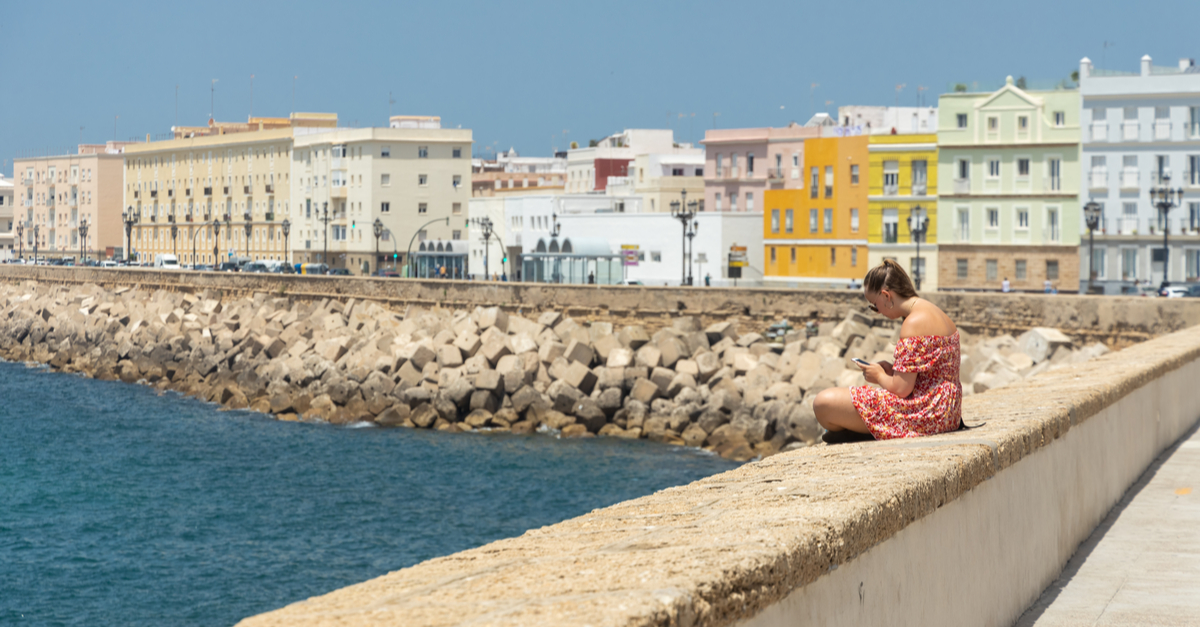
Train to Cadiz
The Andalusian port city of Cadiz in southwestern Spain is a destination for vacationers interested in the town’s
architecture and rich history as well as for tourists planning to relax on the coastal town’s endless beaches. Cadiz
is accessible from anywhere in Spain by train. A trip from Jerez, one of Cadiz’s closes neighbors, takes about 40min
by train.
From Spain’s capital city of Madrid, the trip will take about 4h, while travelers from Barcelona should plan on about
8h for the journey. Every train to Cadiz arrives at the Cadiz railway station, which is the city’s main train
station. Cadiz station is located near the Plaza de Sevilla, adjacent to the city’s main port.
Renfe trains to Cadiz
Renfe, the national railway company of Spain, operates the domestic service in and of the Cadiz railway station.
Renfe operates a few types of trains that travel into Cadiz. The fastest and most modern train to Cadiz is the AVE
trains. Short for Alta Velocidad, Renfe’s AVE trains run on many of the long-distance routes between Spain’s major
cities.
For example, you can catch an AVE train for at least a portion of most of the routes between Cadiz and Barcelona.
About three daily trains run between these cities, and all of the routes require at least one transfer along the
way. Renfe’s Alvia trains also service some of the routes to Cadiz. The long-distance Alvia trains are also
high-speed trains, although they do not run as fast as the AVE trains.
Alvia trains run direct routes between Cadiz and Madrid, with about three trains departing Cadiz per day. Finally,
Renfe’s Cercanias commuter rail trains (also known as Rodalies) travel between the Jerez airport train station and
Cadiz. About 11 trains depart daily from Jerez, and the direct trip includes 11 stops along the way.
Cadiz Day : Shutterstock
Main train stations in Cadiz
The main train station in Cadiz, Spain is the Cadiz railway station, which is a terminus station for the Renfe train
lines. The station is located in the northeastern section of the city, close to the city's main port and just
outside of the Plaza de Sevilla. It is only about 0.3 miles (550 m) northwest of the city’s central square, the
Plaza de San Juan de Dios.
You can walk to the station from most areas of the city or you can take a bus; the city’s main bus station is located
next to the train station, and most of the buses stop here at some point on their route. Metered parking is also
available for travelers arriving by car. At the station, you’ll find a train ticket office and automated ticket
machines and car rental counters as well as a few cafes and bars, vending machines, and ATMs.
Facilities on board trains to Cadiz
When traveling to Cadiz by train, the onboard facilities will vary depending upon the type of train that is servicing
your route. Trips to Cadiz may be serviced by a high-speed AVE train for part of the trip. For example, travelers
departing from Barcelona may use an AVE train for the Barcelona-to-Madrid leg of the trip.
Renfe’s other long-distance train type that services some of the Cadiz routes are the Alvia trains, which service
routes between Cadiz and some of Spain’s large cities, such as Madrid. Both the AVE and Alvia trains offer modern,
air-conditioned cars with comfortable seating that have outlets for charging your devices. Most of these trains are
equipped with a children’s play area, a coffee bar and beverage service, and a restaurant or bistro car.
These trains also offer onboard entertainment, including a wide selection of music and movies, plus newspapers and
magazines. Most AVE trains have been updated with Wi-Fi, which is free through the PlayRenfe app. The Cercanias
(aka, Rodalies) trains are air-conditioned commuter rail-trail trains that offer comfortable seating for local
trips.
Train tickets to Cadiz: useful to know
Renfe accepts mobile tickets if you’re traveling within the country. Simply show your full train ticket on your phone
when boarding the train. However, international travelers are required to print their tickets before boarding. You
can print your ticket from one of the automated machines at the station that is available for this purpose, just be
sure to print out your ticket at least 15min before your train is scheduled to depart.
You don’t need to worry about showing any ID with your ticket, because the tickets are issued without names. When you
purchase your train tickets to Cadiz using Omio, you can easily select the best trip for your desired travel dates.
Booking your tickets in advance on Omio will save you money vs. waiting to purchase your tickets on the day of
travel, and you won’t risk having the train sell out before you get to the station. Plus, with Omio you can store
all of your tickets in your Omio account.
Cadiz Sunset : Shutterstock
To Cadiz by train—travel tips
Once you travel to Cadiz by train, you’ll be able to enjoy all that the coastal town has to offer. The oldest part of
Cadiz, appropriately known as Old Town, is within easy walking distance of the train station. Here, you can explore
the baroque Cadiz Cathedral or climb to the top of the Torre Tavira for an impressive bird’s-eye view of the town.
If you’re visiting Cadiz to enjoy the beach, you won’t be disappointed. At La Caleta, beachgoers can sunbathe on the
golden sands or visit the shops, cafes, and bars that line the beachside promenade. Another popular beach is the
Playa de la Victoria in the southern part of town, another golden-sand beach featuring a promenade.
No matter what activities your vacation plans include, it’s easy to get around Cadiz once you get off the train.
Although you can rent a car at the train station, all parts of Cadiz are easily accessible by the five city bus
lines (#1, #2, #3, #5, and #7) or by walking, so most travelers don’t need a car.
When you’re in Cadiz, you won’t have to work hard to fill your itinerary. Cadiz is one of the oldest continuously
inhabited cities in Europe, and many historic monuments remain for tourists to rediscover. The most notable sites
are located in Old Town, which is at the northern end of the city, including the ruins of an ancient Roman
amphitheater and the Castillo de Santa Catalina along the northern shore next to La Caleta beach.
Spend part of the day exploring the city’s main port and watching the boats come and go. Cadiz is a coastal town, so
be sure to try some of the fresh seafood, such as the raw oysters, or perhaps sample a variety of fish in a
tapas-style meal. Play at the beaches that dot the city’s shores, where you can surf, sail, fish or just relax on
the sand. Cadiz is also a great location for scuba diving!
Once the sun goes down, you can head to El Populo, a neighborhood in Old Town known for its vibrant bar and nightclub
scene. Or do some club hopping along the promenade that stretches behind the beaches of the southwestern shoreline.