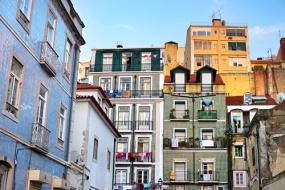
Walking Around in Lisbon
Lisbon is an unusual capital in that the center is a city on two levels, the Baixa and the Bairro Alto. They are connected by steep climbs, as well as a world-famous elevator. A suitable starting place for a stroll is the main Rossio square in the Baixa, which is a spacious plaza and popular meeting point for new arrivals in Lisbon. South of here, Rua da Prata is the main route through the pedestrianized grids of the lower town, packed with stylish small shops, restaurants and cafe-bars. On the western side of the grid is the Elevador de Santa Justa, a cast-iron elevator dating from 1902, offering an easy ride to the Carmo square in the Bairro Alto. The church here was wrecked by the 1755 earthquake that leveled much of Lisbon, but the Gothic remnants are picturesque. The winding streets of the district are tranquil and colorful, leading into pretty squares with attractive bars. There are steeper climbs on the western side of the Baixa, leading up to the Castelo Sao Jorge which has its origins in an 11th-century Moorish fortress. Sprawling beneath the castle walls is the old quarter of Alfama, slowly being gentrified with clubs, bars, cafes and craft stores.
Eating in Lisbon
Lisbon is one of the most affordable European cities, as well as a foodie haven. The city boasts cool new restaurants, serving a variety of modern Portuguese dishes, older establishments serving classic local cuisine, and countless bars and food markets with a more versatile menu. From seafood to comfort food, Lisbon has it all. Like any city, Lisbon has its own signature dishes along with popular national dishes. Among the foods every traveler needs to sample is Portuguese custard tarts, locally known as Pastéis de nata. These egg custard tarts feature a buttery golden puff pastry and are a delight for even the most sophisticated taste buds. For travelers looking for a more authentic Portuguese dish, nothing beats Feijoada. The dish features a bean and pork stew with a twist. In this dish, bits of pork that would otherwise not be used in a dish find their way to your plate. These include chopped pig ears and noses, as well as bits of pork belly and ribs. This is one of the most popular and revered dishes in Portugal. Visitors who fancy a good glass of wine should pair it with the creamy and rich Azeitao cheese that is only produced in Portugal.